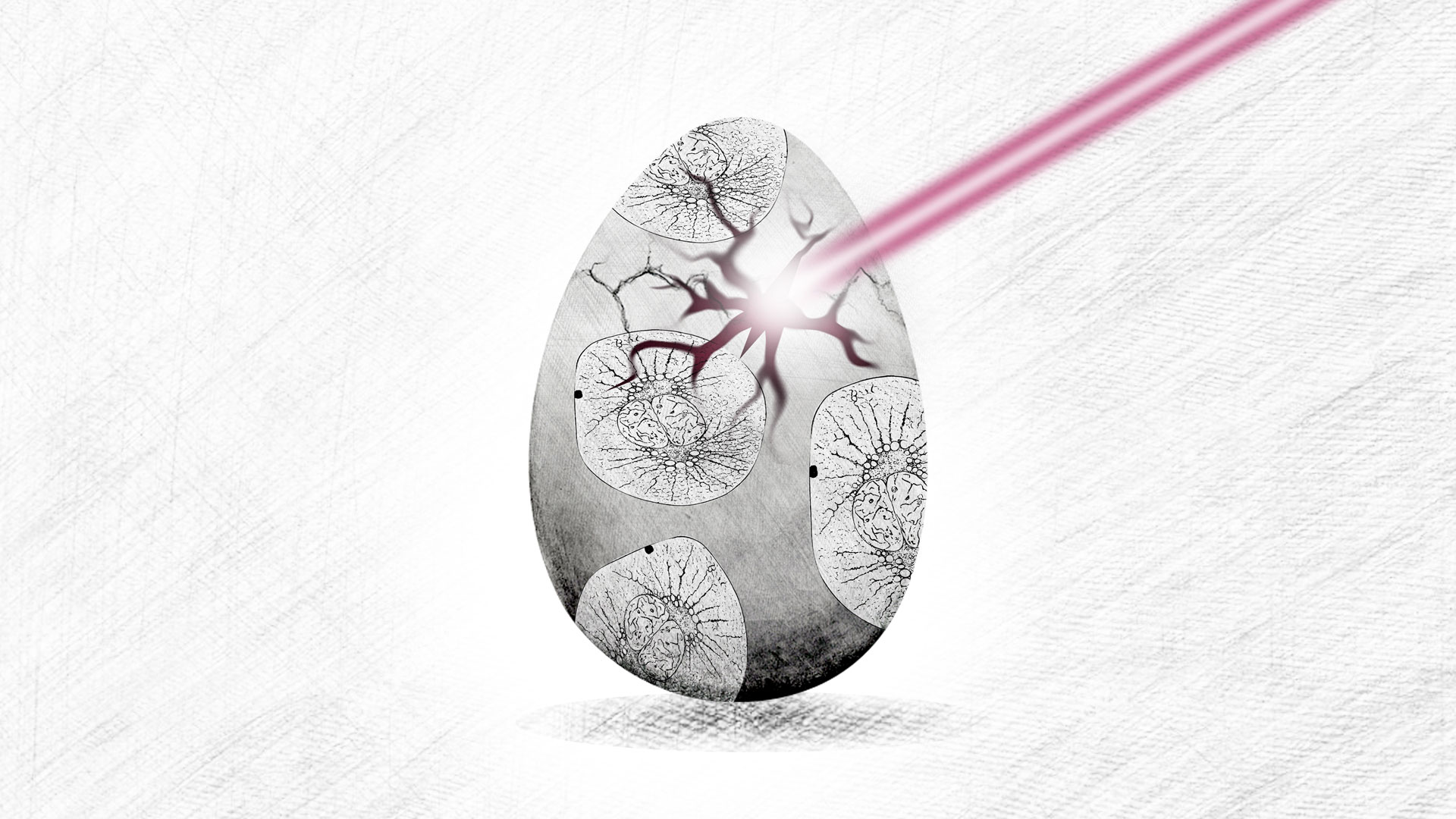
Laser Assisted Hatching (LAH) is an advanced lab technique used along with IVF or IVF-ICSI processes (patient-specific) designed to aid the efficiency of an embryo to hatch and implant in the uterus successfully.
A shell called zona pellucida surrounds the unfertilised egg. The zona has an important role in fertilization as it allows only one sperm to penetrate and enter the egg to achieve fertilisation. After fertilisation, the fertilised eggs are kept in the lab for 2 - 5 days allowing them to divide and develop into an embryo. At the cleavage stage of the embryo, the zona pellucida hardens. This is normal and serves to keep the cells of the embryo together. Then the embryo is transferred to the uterus. A fertilised egg or an embryo do not guarantee a pregnancy; for implantation to happen, this zona protective shell breaks out naturally and the embryo is implanted on the uterus wall resulting in a successful conception.
But in some cases, the zona layer of the embryo becomes harder, making hatching difficult and hence preventing the embryo from implantation in the uterus resulting in failed conception, an failed IVF as well. Laser assisted hatching creates a small crack on zona before inserting the embryo in the uterus to help successful hatching and implantation leading to pregnancy.
Laser assisted hatching increases the chances of successful implantation and pregnancy from 55% to almost 65%.
LAH procedure is carried out on the 3rd day of fertilisation when the embryo is still in the lab. In this technique, a specialised laser is used to create a breach in zona pellucida. Laser shots soften the zona pellucida, which helps to create an opening. Then, the embryo(s) is transferred to the uterus. This helps the embryo in hatching and implanting in the endometrial lining of the uterus resulting in a successful conception.
Laser technology allows a more controlled approach and is the safest and most effective technique. The laser will not come in direct contact with the embryo and is performed with utmost delicacy and precision. This procedure ensures the safety of the embryo.
Though making a small crack in the zona pellucida sounds like a simple technique, it involves precise procedures and a skilled technician to perform it. The whole process is fairly quick and takes only a few seconds.
Laser Assisted Technique is generally recommended for women who have:
If a woman is undergoing IVF, that does not mean she will be recommended LAH. Experts believe that LAH might bring successful pregnancy only in certain types of couples.
.png) Embryo Damage
Embryo Damage
One of the possible risks is embryo might get lethally injured. This can happen before the embryo transfer or after. In any case, pregnancy will not occur. But the chance is rare.
 No Pregnancy
Even after LAH, the embryo might fail to hatch completely.
 Multiple Pregnancy
LAH can also result in multiple pregnancies. Generally, IVF is associated with multiple pregnancies, and LAH procedure increases this risk further. This leads to high-risk pregnancies but is seen in less than 1% cases.